Transparency: We may earn a commission from sales or links within our domain portfolio. Read Disclosure
Ethically route type‑in, legacy, and underused traffic to the destinations that actually move your business forward.
• Capture: Stop wasting direct, type‑in, and legacy traffic on dead pages or parked screens.
• Control: Decide exactly where each stream of traffic goes—and why.
• Convert: Forward visitors to pages, funnels, or partners that can turn attention into revenue.
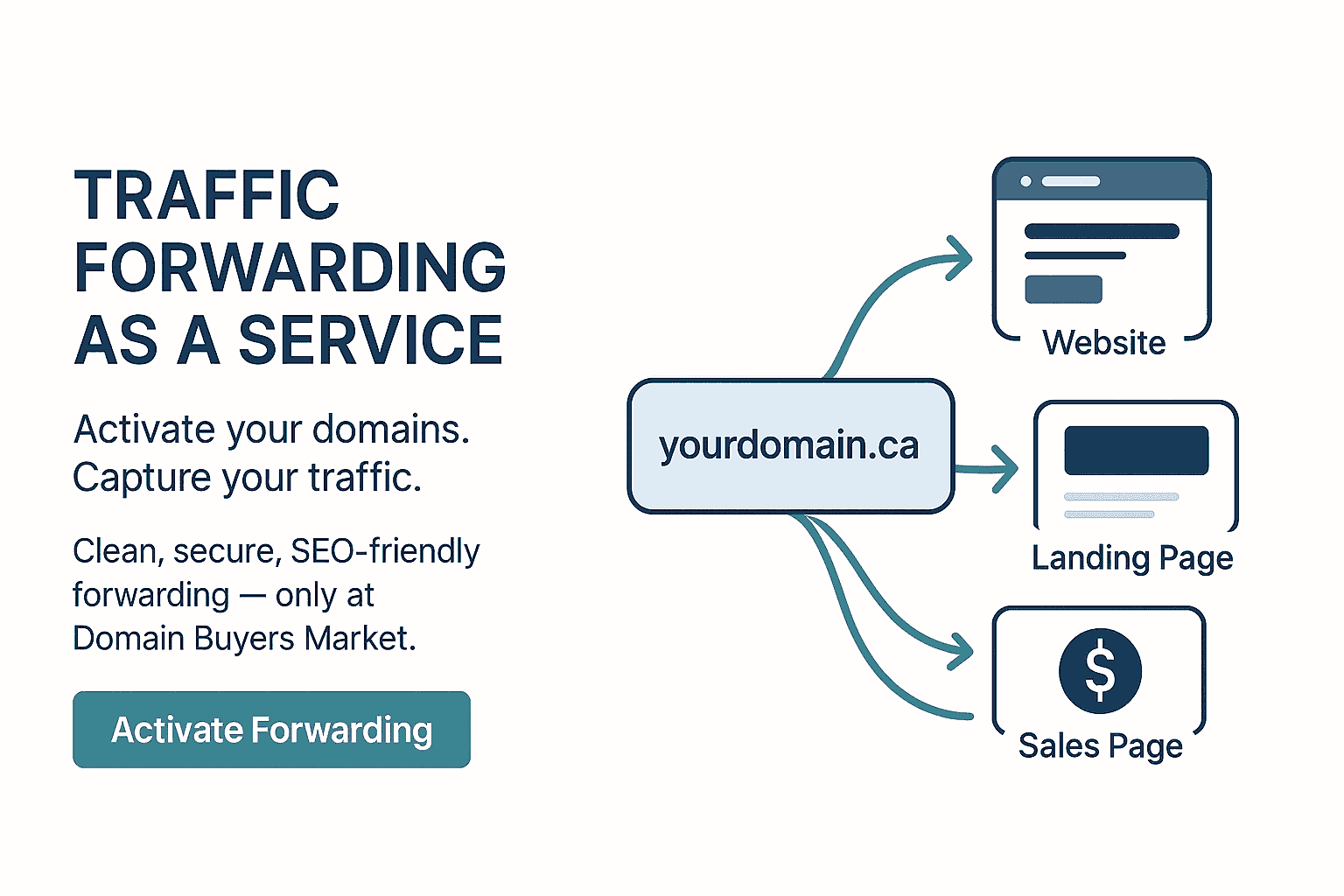
Most businesses and investors underestimate how much traffic quietly leaks away—through old domains, outdated campaigns, legacy URLs, and unoptimized direct visits. The Traffic Forwarding Service from Domain Buyers Market (DBM) is designed to fix that. We help you capture, structure, and forward traffic from your domains and digital assets to the destinations that matter most: high‑intent landing pages, lead funnels, partner offers, or monetization endpoints you control.
The Traffic Forwarding Service is a managed, policy‑driven traffic routing solution that takes visitors from domains, URLs, and digital assets you own and forwards them to strategically chosen destinations. It is not a traffic‑buying scheme or artificial traffic generator. Instead, it organizes and redirects existing, legitimate traffic so it supports your current business goals.
In simple terms:
Traffic Forwarding is the process of taking real visitors who land on your domains or URLs and sending them—intentionally—to pages where they can learn, subscribe, inquire, or buy.
Core components:
• Traffic mapping: Identify where traffic is currently landing and where it should go.
• Forwarding rules: Configure domain‑level and URL‑level forwarding policies.
• Compliance & clarity: Use transparent, user‑respectful forwarding practices.
• Monitoring & refinement: Adjust destinations as your strategy evolves.
Unstructured traffic is a silent leak. Visitors hit old domains, outdated URLs, or placeholder pages and then disappear. That’s lost attention, lost data, and often lost revenue.
The Traffic Forwarding Service matters because it:
• Protects existing demand: If someone types in your domain, they should never hit a dead end.
• Supports current campaigns: Forward legacy or secondary domains to your best current offers.
• Simplifies your ecosystem: Reduce confusion by consolidating scattered entry points into a few high‑value destinations.
• Improves user experience: Visitors land somewhere relevant, fast—no tricks, no confusion.
• Respects legal and ethical boundaries: Forwarding is done transparently and in line with user expectations and platform policies.
For domain investors, operators, and brands with multiple properties, structured traffic forwarding is often the fastest “win” you can implement.
Domain investors & portfolio owners
• You own multiple domains with type‑in or residual traffic.
• You want that traffic to support sales, lead generation, or partner offers—without building full sites for every domain.
Businesses & brands
• You have legacy domains, old campaign URLs, or retired microsites still receiving visits.
• You want to forward those visitors to your current website, product pages, or funnels.
Creators, agencies, and studios
• You manage multiple brands, client domains, or project URLs.
• You need a clean, centralized way to route traffic to the right live experiences.
Acquirers & investors in digital assets
• You acquire domains, brands, or sites and want to immediately put their traffic to work.
• You need a structured, documented forwarding plan that can evolve with your portfolio.
If you have more than one domain—or you’ve ever wondered “where does that traffic go now?”—this service is built for you.
1. Traffic and asset discovery
• Domain inventory: Identify all domains and key URLs you want to include.
• Traffic sources: Review available analytics, registrar data, or server logs (where accessible).
• Risk and compliance scan: Flag any sensitive, legacy, or high‑risk contexts that require special handling.
2. Strategy and destination mapping
• Primary destinations: Choose your main target pages (e.g., homepage, lead magnet, product page, marketplace listing).
• Secondary destinations: Define alternate routes for specific segments or campaigns.
• Forwarding logic: Decide which domains/URLs go where and why.
3. Technical forwarding setup
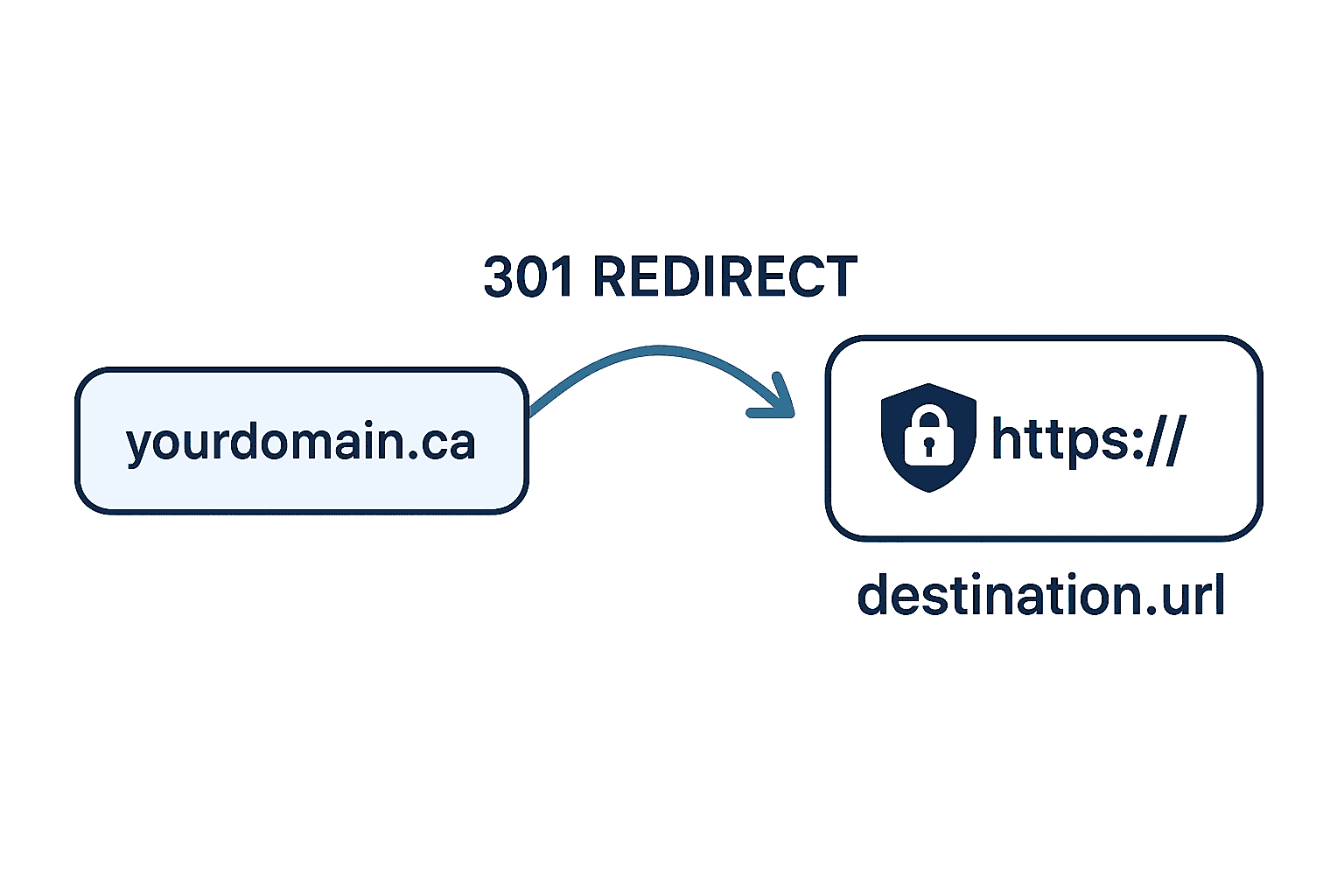
• Domain‑level forwarding: Configure 301/302 forwarding at registrar or DNS level where appropriate.
• Path‑aware forwarding (where supported): Preserve or map URL paths when needed.
• HTTPS and canonical considerations: Ensure forwarding supports a clean, SEO‑friendly structure.
4. Documentation and policy
• Forwarding map: A clear document showing each domain/URL and its destination.
• Change protocol: How to request updates or changes to forwarding rules.
• Compliance notes: Guidance on transparent, user‑respectful forwarding practices.
5. Optional monitoring & refinement
• Periodic review: Check performance and adjust destinations as your strategy changes.
• A/B destination testing (where appropriate): Test different destinations for specific domains.
• Portfolio evolution: Update forwarding as you launch new offers, pages, or partnerships.
Monetize parked or underused domains
Forward type‑in traffic from parked domains to relevant marketplace listings, lead capture pages, or partner offers—without building full sites.
Consolidate brand entry points
Forward legacy brand domains, old campaign URLs, and retired microsites to your current primary site or product pages.
Support domain sales and leasing
Forward traffic from premium domains to for‑sale or lease landing pages, ensuring interested visitors see clear options instead of a blank page.
Bridge acquisitions and rebrands
When you acquire a domain or rebrand a site, forward old URLs to the new experience so visitors don’t get lost.
Protect reputation and user experience
Ensure that any domain associated with your brand leads to a safe, relevant destination—not a random parked page or error screen.
No. The Traffic Forwarding Service does not buy, generate, or fake traffic. It organizes and forwards traffic you already receive—from domains and URLs you control—to destinations that better support your goals.
When done correctly, forwarding can actually improve clarity and reduce duplicate or confusing entry points. We use best‑practice forwarding methods (such as 301 redirects where appropriate) and avoid deceptive or cloaked behavior. If SEO is a major concern, we’ll discuss the right approach for each domain.
Yes, or we’ll need coordinated access through your technical team. Forwarding is typically configured at the registrar, DNS, or hosting level. We’ll provide clear instructions or, where permitted, implement changes directly.
Yes, as long as it aligns with your agreements and the destination’s policies. Many clients forward traffic to marketplace listings, affiliate partners, or lead forms. We’ll help you structure this in a transparent, user‑respectful way.
Most Starter and Portfolio setups are completed within 5–10 business days after we have access and a confirmed forwarding map. Managed Forwarding Care is ongoing, with adjustments made on a monthly or agreed‑upon cadence.
Every visit to your domains is a chance to inform, qualify, or convert. When that traffic hits dead ends, you lose more than numbers—you lose opportunities. The Traffic Forwarding Service gives you a clear, documented, and compliant way to route visitors to the destinations that matter most.
No tricks, no artificial traffic—just a structured way to use what you already have.
——————–
As always, I am an email away if you need a little assistance 🙂
Let’s Chat – Free Consultation
We’ll help you launch your website. YOU can do this!
COOKIE POLICY:
This website uses cookies and other tracking technologies to enhance user experience and to analyze performance. No personal information is collected.